
Can an Executor Sell a House Before Probate in Ontario?
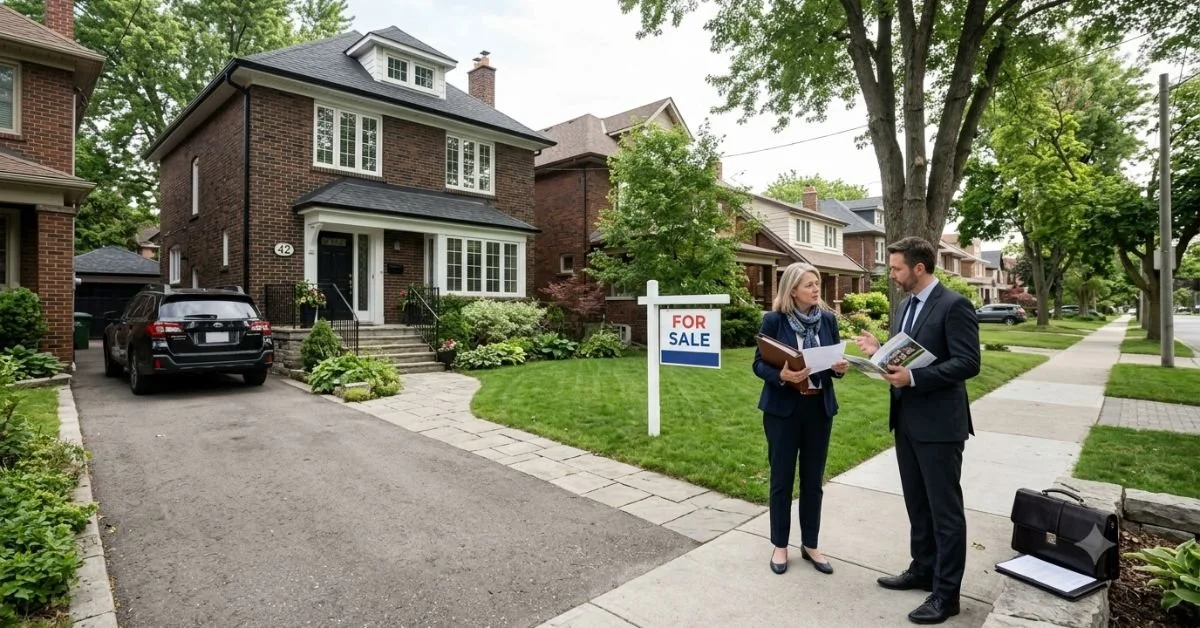
An estate trustee named in a valid will derives authority from the will itself. Probate confirms and proves that authority to third parties rather than creating it. Ontario's probate guidance says the certificate should be obtained before anyone enters into an agreement of purchase and sale for estate real property, because the certificate provides the court confirmation generally required to establish that authority to third parties and complete the transfer. In practice, that means a listing can proceed, but a firm sale that has to close before the certificate arrives is where estates run into trouble.
Where Does an Executor's Authority to Sell Come From?
From the will, in the ordinary case. A person named as estate trustee in a valid will holds the office from the moment of death. The certificate is evidence of that appointment, not the source of it. This is why an estate trustee can secure the property, insure it, pay urgent expenses and instruct a real estate agent before a certificate has issued.
An administrator on an intestacy is the different case. Where there is no will, nobody holds the office until the court makes the appointment. There, authority genuinely does come from the grant. An intended administrator who signs an agreement of purchase and sale before appointment is contracting without standing.
Third parties are the constraint, not the estate trustee's own power. The land registry office needs evidence of authority before registering a transfer out of a deceased owner's name. A buyer's lawyer needs to know the transfer will register. A title insurer needs the same comfort. None of them is examining whether the estate trustee holds the office in the abstract. They are asking for the document that proves it.
What Does the Will Say About Selling?
Most professionally drafted wills contain an express power of sale, authorising the estate trustee to sell, call in and convert estate property. Where that power exists, the estate trustee's own authority to sell is not in question.
A will without a power of sale is a different exercise. The estate trustee may still be able to sell in order to pay debts and administer the estate, but a specific gift of the property to a named beneficiary points the other way, because the beneficiary is entitled to the asset rather than the proceeds.
Real property devolves to the estate trustee on death. It does not sit ownerless. Under the Estates Administration Act, real property vests in the personal representative for the purposes of administration, which is what allows the estate trustee to deal with it at all.
When Can You Sell Without Probate at All?
Joint tenancy with right of survivorship. Where the deceased held the property as a joint tenant, the interest passes to the surviving owner by survivorship and a survivorship application deals with the title. This is different from tenancy in common, where the deceased's share does form part of the estate.
The first dealings exemption. Where land was brought into the Land Titles system through the administrative conversion from the older Registry system, and there has been no dealing with the property since that conversion, the estate trustee may be able to transfer it without a certificate of appointment. The exemption is only available where the deceased left a valid will. On an intestacy it is not available, and probate is required to deal with the property. Whether a particular property qualifies is a title question that a real estate lawyer confirms by searching the historical title, not something that can be assumed from the age of the house.
The automatic vesting rule, which is not a plan. Section 9 of the Estates Administration Act vests real property not disposed of or distributed within three years of the death in the persons beneficially entitled, without any conveyance, unless the estate trustee has registered a caution. Section 10 preserves powers conferred by the will, so an unrestricted power of sale coupled with a discretion to postpone conversion can prevent section 9 from forcing vesting, though the result depends on the wording of the will and the nature of the beneficiary's interest. Reaching this point by accident creates problems rather than solving them, because the estate trustee may lose control of the asset while still carrying the liabilities attached to it.
How Should the Agreement of Purchase and Sale Be Handled?
Situation
Practical position
Certificate already issued
Sale proceeds in the ordinary way, with the certificate available for registration
Certificate applied for, closing date flexible
A probate condition or an extended closing keeps the transaction alive without forcing a completion the estate cannot deliver
Certificate not yet applied for, buyer wants a firm quick close
The highest risk position. The estate can be exposed on a closing it cannot complete
First dealings exemption available and confirmed
Transfer can proceed without a certificate, on a lawyer's confirmation of title
Intestacy, no appointment yet
No one holds the office. Signing before appointment is contracting without standing
A probate clause is the standard mechanism. It addresses what happens if the certificate has not issued by the scheduled closing date, typically by allowing an extension. Our guide to the probate clause in Ontario real estate sets out how these clauses are drafted and what they cover. Our guide on the transfer of property after death with a will covers the registration side.
What About the Tax Consequences of Selling?
The Estate Administration Tax is charged on the date of death value, not on the sale price. Selling for more than the estate valued the property at does not increase the tax, though a materially different sale price shortly after death invites questions about whether the original valuation was supportable.
Registered encumbrances are deductible. A mortgage or lien registered against Ontario real property reduces the value on which the tax is calculated. Real estate commissions, legal fees and the costs of sale do not.
Real property outside Ontario is excluded from the calculation. It is dealt with under the law and probate process of the jurisdiction where it is located, which frequently means a separate application there.
Gain or loss after the date of death belongs to the estate. The deemed disposition fixes the value at death. Movement in value between then and the sale is the estate's gain or loss, reported on the estate's return.
Where This Goes Wrong
Signing a firm agreement with a close date the certificate cannot meet. This is the most common failure, and it is a scheduling problem rather than a legal one. The fix is a probate condition or a longer closing, agreed before the offer is accepted.
Assuming the first dealings exemption applies. It depends on the property's registration history and requires a valid will. A search confirms it. An assumption does not.
Emptying the house before the valuation. Contents and the property itself need a supportable date of death value, and clearing a house first makes that harder to establish.
Distributing the proceeds too quickly. Sale proceeds are estate assets. Debts, taxes and the tax clearance position come before beneficiaries, and a distribution made without a clearance certificate or an adequate holdback exposes the estate trustee personally.
Selling to yourself or to a connected person. An estate trustee who buys estate property, or arranges a sale to a relative or partner, is on both sides of the transaction. Courts scrutinise these sales closely.
If a property is already listed or an offer is in hand, the sequencing question is worth an hour of advice rather than a month of delay. You can book a free call to work out what your timeline actually allows.
Frequently Asked Questions
Can you list a house for sale before probate is granted in Ontario?
Listing and marketing generally can proceed. The pressure point is the closing, because the land registry office needs evidence of the estate trustee's authority to register the transfer. Ontario's probate guidance is that the certificate should be obtained before entering into an agreement of purchase and sale for estate real property.
How long does an executor have to sell a house in Ontario?
There is no fixed selling deadline. Section 9 of the Estates Administration Act can vest undistributed real property in the beneficiaries three years after the death unless a caution is registered, but section 10 preserves powers conferred by the will, and an unrestricted power of sale with a discretion to postpone conversion can prevent that. Three years is not a universal selling deadline. Whether it operates on a given estate depends on the will.
What is the first dealings exemption in Ontario?
It allows an estate trustee to transfer certain Land Titles property without a certificate of appointment, where the land was administratively converted from the Registry system and there has been no dealing with it since. It requires a valid will and is confirmed by a title search, and it is not available on an intestacy.
Does selling a house before probate avoid the estate administration tax?
No. The tax is calculated on the value of the estate assets as at the date of death, including real property that formed part of the estate. Selling early changes the timing of the cash, not the calculation. Where the first dealings exemption applies and no certificate is needed at all, that is a different situation.
Can an executor sell a house without the beneficiaries agreeing?
Where the will contains a power of sale, the estate trustee can generally sell without unanimous agreement, subject to the duty to obtain a proper price and to act even-handedly. Where the property is the subject of a specific gift to a named beneficiary, the position is different, because that beneficiary is entitled to the property itself.
What happens if the certificate does not arrive before closing?
The transaction depends on what the agreement says. A properly drafted probate condition allows the closing to be extended. Without one, the estate may be unable to complete on the scheduled date, which is why the clause is negotiated at the offer stage rather than the week before closing.
This article provides general information about Ontario law and is not legal advice. Speak with a lawyer about your specific circumstances.